


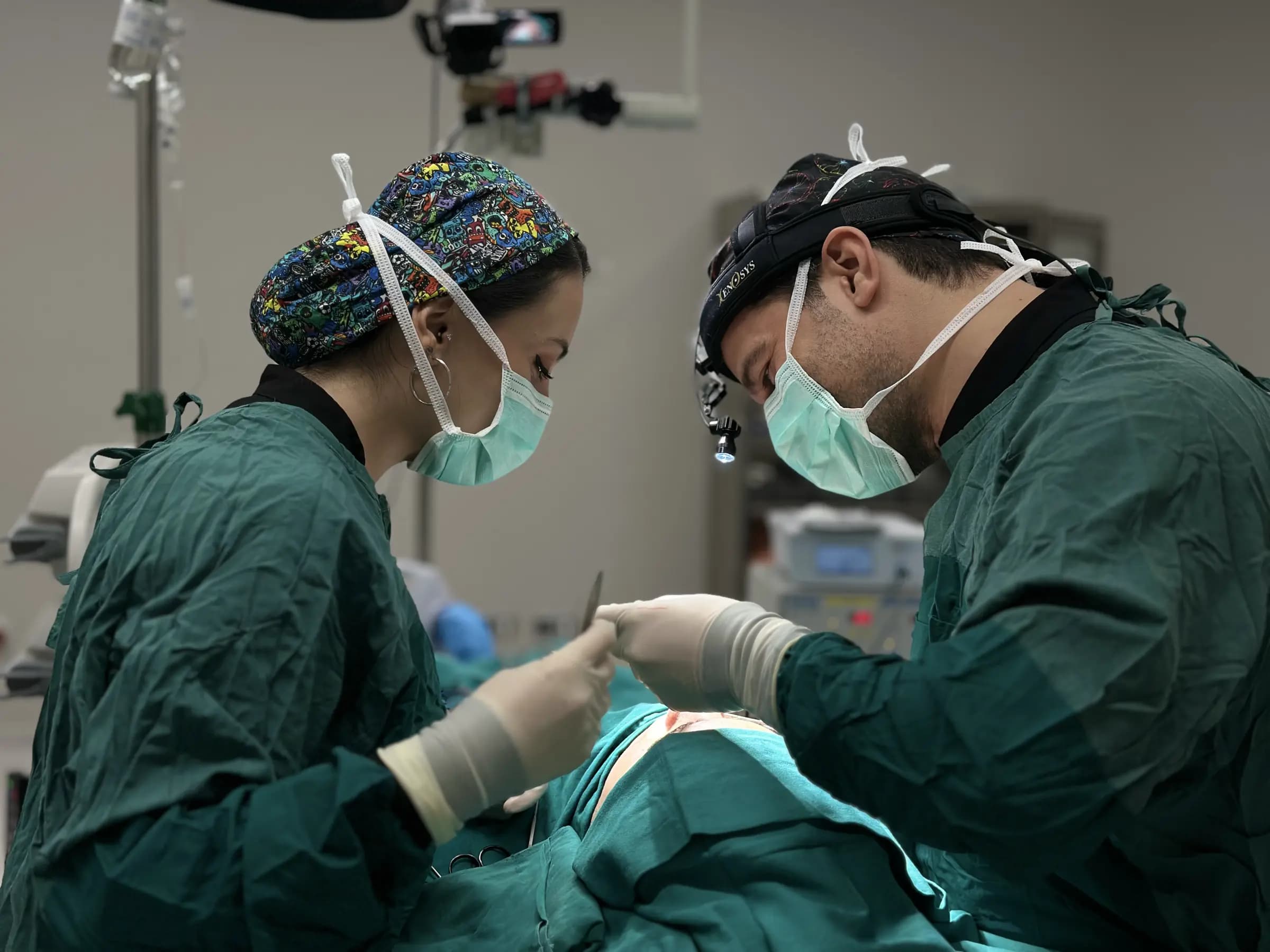
ANKARA · NASAL SURGERY
Functional nasal surgery aims to improve breathing by correcting structural problems that narrow the nasal airway.
Causes of nasal blockage
Nasal blockage is not due to a single cause. A deviated septum, enlarged turbinates, narrowing or collapse of the nasal valve, defects of the nasal bones and cartilage structure, allergy or chronic inflammation can all lead to blockage.
For correct treatment, the cause must be determined by examination.
Assessment
An examination inside the nose is performed, with endoscopy if necessary and imaging in some cases. It is determined which area the breathing complaints come from and which structures contribute to the narrowing.
Surgical options
When necessary, septoplasty, turbinate reduction, cartilage grafts that support the nasal valve (for example spreader grafts) and other structural corrections may be applied. These procedures can be performed alone or together.
In causes such as allergy, medication or non-surgical methods may be tried first. Not every nasal blockage requires surgery.
Recovery and expectations
A feeling of blockage may be present for a short time after surgery; breathing gradually becomes easier. The result varies with the cause of the blockage and the person’s recovery; it cannot be guaranteed that all complaints will resolve completely.
When is it considered?
- Nasal blockage that has continued for a long time
- Collapse of the nostrils when breathing in
- An inadequate response to medication
- Snoring or difficulty breathing during sleep
How does the process work?
- Taking the breathing complaint and history
- Examination inside the nose and endoscopy
- Identifying the structures that cause blockage
- Discussion of non-surgical and surgical options
- Surgery and check-ups
Frequently asked questions
Can functional nasal surgery and aesthetic correction be performed together?
Yes. The breathing problem and appearance can be addressed together; in this case the procedure is planned within rhinoplasty.
What is turbinate reduction?
It is a procedure that aims to widen the airway by reducing the volume of the turbinates inside the nose. Whether it is needed is determined by examination.
What is the first step for nasal blockage?
Determining the cause by examination. In many cases, non-surgical treatments are considered first.