

ANKARA · NASAL SURGERY
Septoplasty is a functional operation performed to relieve breathing problems caused by deviation of the nasal septum.
What is septal deviation?
The septum is the wall of bone and cartilage that divides the nasal cavity into right and left sides. It may curve to one side from birth, during growth or after trauma.
Deviation can narrow airflow inside the nose and contribute to one- or two-sided blockage, snoring, nosebleeds or recurrent sinus complaints. Not every septal deviation causes complaints.
Diagnosis and assessment
Diagnosis is based on the history and an examination inside the nose. When necessary, the inside of the nose is examined in detail with endoscopy. Other causes of the breathing complaint (enlarged turbinates, allergy, nasal valve narrowing) are also investigated.
The decision for septoplasty depends on the severity of the complaints and the response to non-surgical options such as medication.
Surgery and recovery
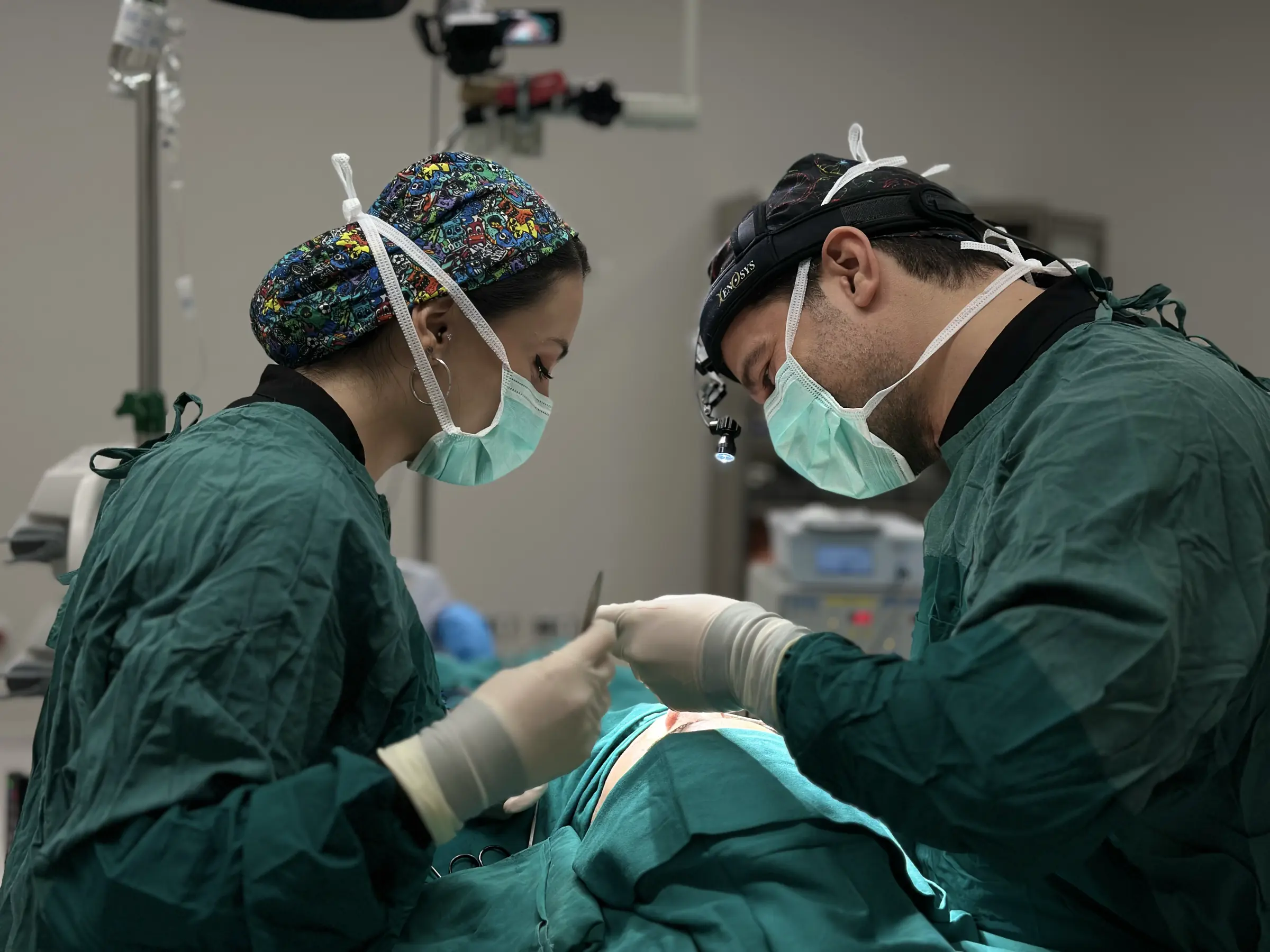
Septoplasty is performed from inside the nose and does not require an external incision. The curved parts are straightened or, when necessary, removed; the supporting function of the septum is preserved as far as possible. After surgery, packing or silicone splints may be used inside the nose.
A feeling of blockage may be present in the first days after surgery. Nasal care and check-ups continue according to the physician’s recommendations. It can be planned together with rhinoplasty or performed on its own.
Risks
Bleeding, infection, renewed deviation of the septum, crusting and, rarely, septal perforation have been reported. These risks and the expected benefit are assessed together before surgery.
When is it considered?
- Constant or one-sided nasal blockage
- Breathing problems that continue despite medication
- Snoring or nosebleeds due to septal deviation
- Recurrent sinus complaints related to septal deviation
How does the process work?
- Examination inside the nose and, if necessary, endoscopy
- Assessment of other causes of blockage
- Review of non-surgical options
- Surgery and discharge instructions
- Follow-up examinations
Frequently asked questions
Does septoplasty change the outside appearance of the nose?
Because septoplasty is performed from inside the nose, it does not on its own aim to change the external shape. If the appearance is also to be changed, it can be planned together with rhinoplasty.
Is surgery needed for every nasal blockage?
No. Causes such as allergy, enlarged turbinates and infection can be addressed with medication or other methods. The decision is made according to examination findings.
Can the deviation recur after septoplasty?
Rarely, the deviation may partly return. This risk is discussed before surgery.